

Find a track's key and BPM
How it works
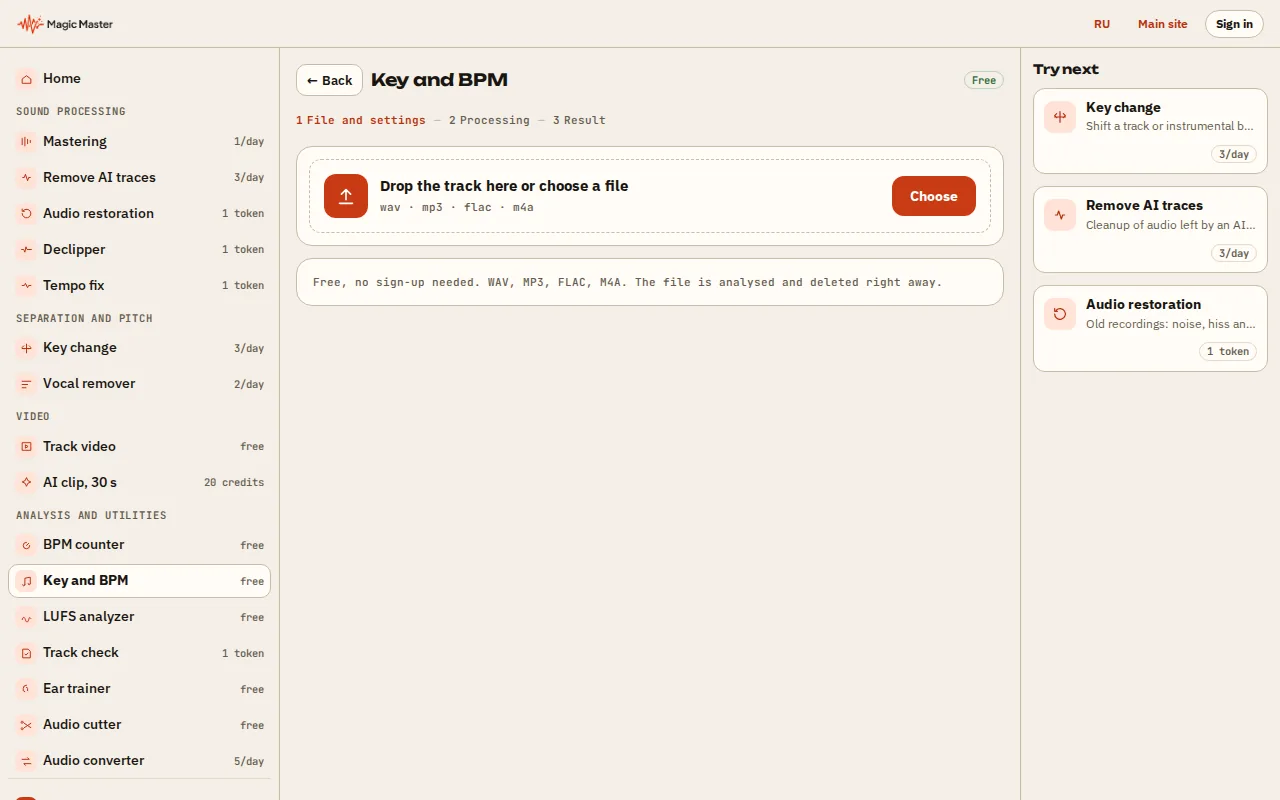
1. Choose a track or beat: WAV, MP3 or FLAC. 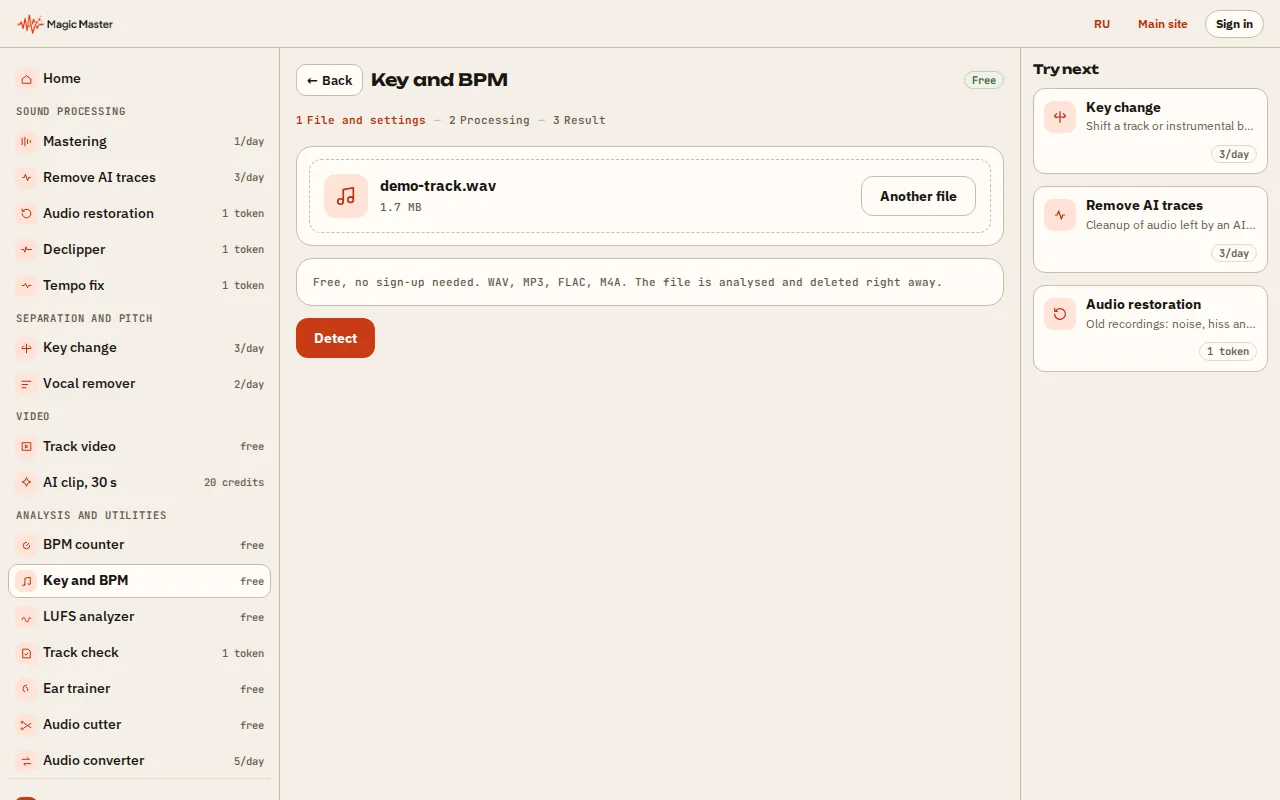
2. Press Detect: the app finds the key and the BPM. 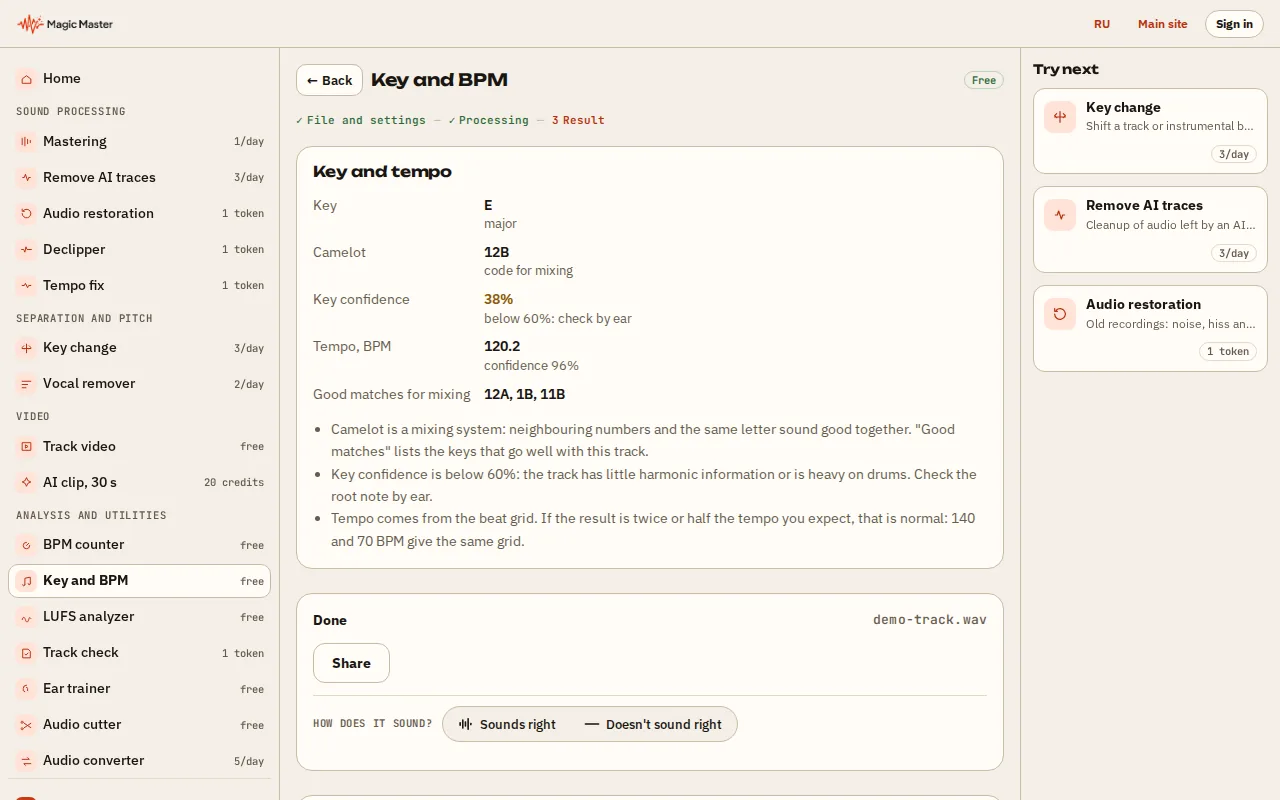
3. Check the result: the note, the mode, the Camelot code and compatible keys. 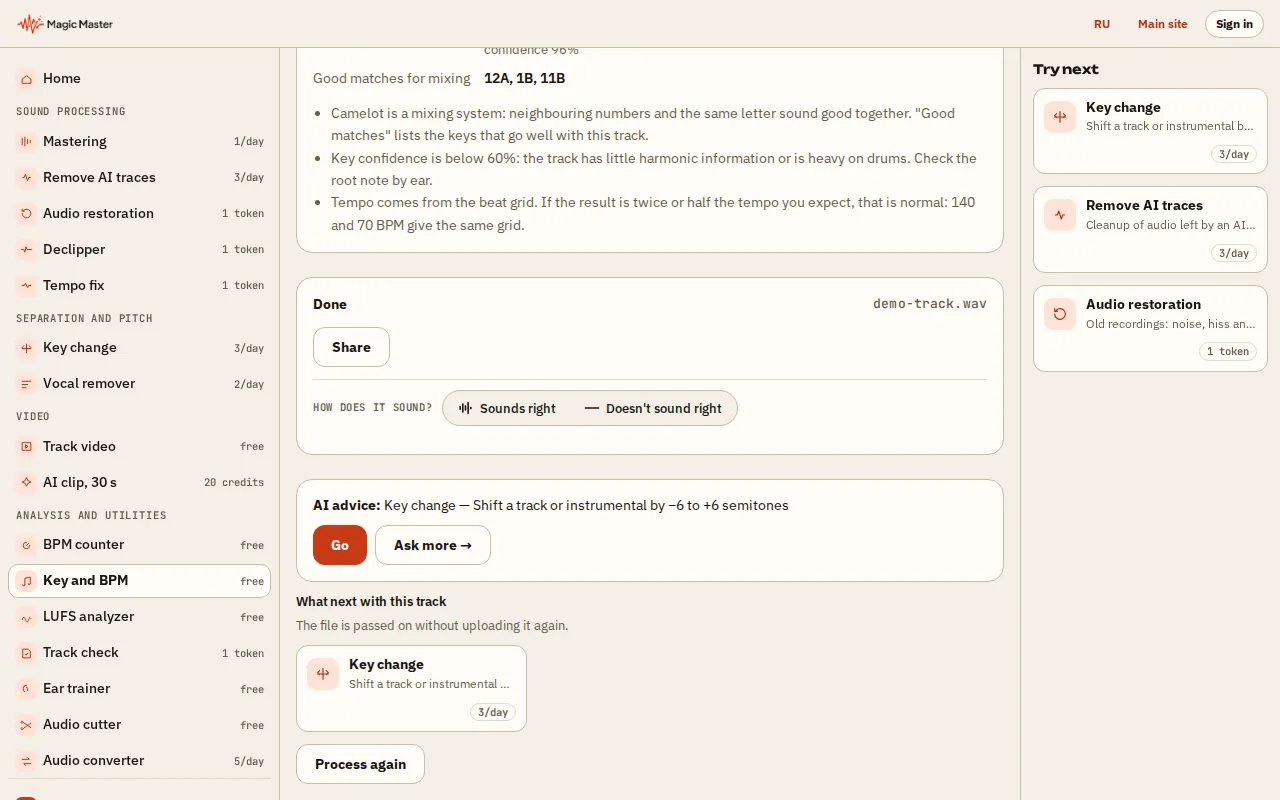
4. Next you can change the key or master the track.


No file? Tap the tempo: press the button or the space bar in time, and the BPM appears after four taps. Files up to 160 MB are deleted right after the analysis.
What you get: Key, mode, BPM and Camelot code for DJ mixes.
Upload a track. The finder listens to the harmony and the rhythm, then gives the key, its Camelot code for harmonic mixing, the tempo, and how sure it is about each.
Key
BPM
Keys that mix well with this one
The file is analysed on our server and is not published. Nothing is charged for this check.
Going to make a backing track in another key? Remove the vocals first with the vocal remover, then change the key of the instrumental.
What the finder tells you
Key is the note centre and the mode of the track: major or minor. The finder reads the chords and the bass line, so a track with few chords or a very dense mix can give a lower confidence. Below 60 percent, check the key by ear before you rely on it.
Camelot code is a short label for the key, such as 8A or 11B. Keys with neighbouring numbers, and the same letter, sound together without clashing. The chips show the keys that mix well with the one you found.
BPM is the tempo from the rhythm of the whole track. If the number is exactly double or half of what you expected, both readings describe the same beat. Use the BPM counter to tap the beat yourself.
Questions
How do I find the key of a song for free?
Upload the file above. The key, the Camelot code and the tempo appear in a few seconds. No sign-up is needed.
What is the Camelot code?
It is a numbering of the 24 keys on a wheel, so that mixing keys with neighbouring codes stays in tune. A major key and its relative minor share the same number, and the letter tells the mode: A means minor, B means major.
Can the finder be wrong?
Yes, especially with a very dense mix, a track with a key change, or a sound without clear harmony. Look at the confidence figures and trust your ear when they are low.
What can I do with the key once I have it?
Move the whole track to another key with the key changer, split the vocals or the drums with the stem splitter, or master the track in the lab.